
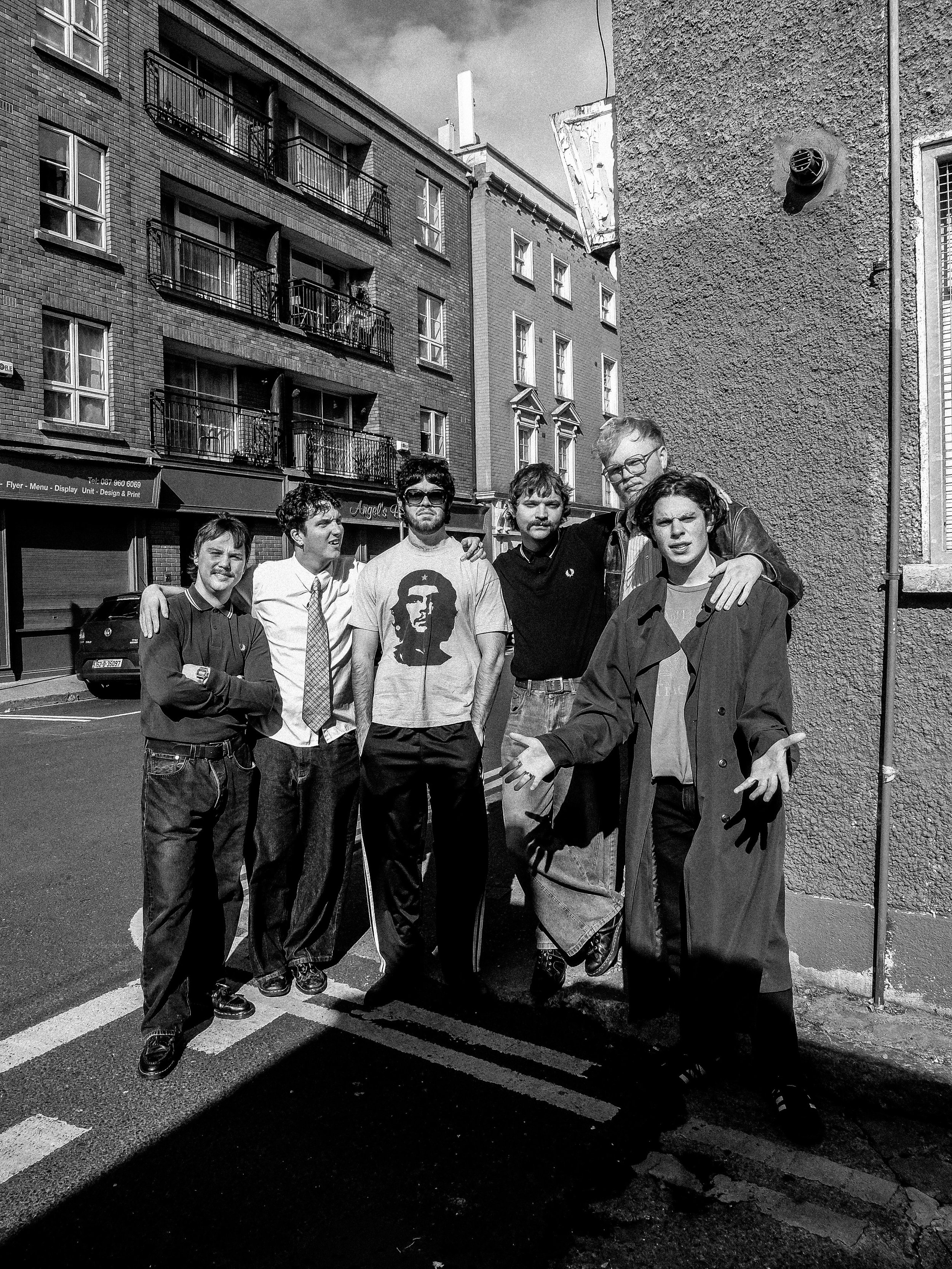
The first time I heard of Madra Salach (dirty dog as Gaeilge / in Irish) was (like many in Dublin) from their Lips2ears session back in October of 2024, which circulated quickly online. (At the time of writing this it has over 46k views on YouTube.)
The five (now six) piece group gave a performance of several well known Irish ballads such as ‘Spancil Hill’, ‘A Pair of Brown Eyes’, and ‘Building Up and Tearing England Down’, but it was their original tune ‘The Man Who Seeks Pleasure’ that in the past year has made its way into the hearts and voices of Dublin youth.
Last year, being back in Dublin for the holidays, I saw Madra Salach twice - at the Fourth Corner in the Liberties for Lips2ears' New Years gig, and at Whelans’ 'Ones To Watch’ (an annual showcase of up and coming Irish acts).
This year, I got to see them play Whelans again, this time for their New Years Eve headline, where they sold out the Dublin venue of a 450 person capacity, the crowd singing along at the top of their lungs, to classic ballads and covers such as Sinead O’Connor’s ‘Black Boys on Mopeds’, as well as Madra Salach originals.
‘Blue and Gold’ and ‘I Was Just A Boy’ have both been released as singles in the past few months leading up to the release of their highly anticipated debut EP; ‘It’s A Hell Of An Age’ which came out January 23rd. Throughout February, March and April, they’ll be embarking on a tour across Ireland/UK.
I sat down with the group's frontman Paul, to chat about how they formed, what led them to where they are now, and what’s to come in the near future…
Róisín:
So you're all from Dublin, except for Jack.
Paul:
Except for Jack yeah, he’s from Wicklow, our newest member.
Róisín:
How did the group form originally, and how did you all meet?
Paul:
Well, there's no good story, to be honest with you, like all six of us, none of us went to the same school. Jack joined us in May or June, and before that, it was the five of us, all from North Dublin. And North Dublin, you know, Dublin's small, especially if you're into alternative music anyway, and into live music.
And so, we all kind of knew each other one way or another, some of the lads I've known since my early adolescence.
It kind of started with, one side of it was that myself and Dara the drummer and Adam the guitarist, wanted to play casually in pubs, playing ballads, just because we liked that music, and we didn't see it as any sort of real project or anything, literally just a hobby and for a laugh.
First session we ever went to was an open session at a pub near us,
November 2022, and then I think around the same time I asked Jack Martin and Max if they were interested in starting a kind of side project around sort of ambient folk music. Obviously it just made sense that the two things just kind of smashed together. It was a bit of cross pollination. We were doing these pub gigs that were just about playing music and drinking a lot, and then it just kind of all blended together.
Róisín:
I guess that leads into my next question, which is what led you guys in the direction of the music you're making now?
Obviously it's good to learn covers before writing an original tune. So what were the first tunes you were playing together as covers, and then what was the first one that was written?
Paul:
Yeah, I guess for covers, we could probably do most ballad standards. We were doing probably two and a half hour sets in the pubs, mainly in one called the 1884, that was where we did most of it. Then we did a few more around the Northside - the Raheny Inn, and the Raheny GAA club.
The big ballads, you usually got asked enough that you kind of have to learn them, like the big Luke Kelly ones and stuff.
We got used to playing with each other. But there wasn't much, if any, artistry in that. That was just us playing the songs, you know, and then, but also quite early, we wrote ‘The Man Who Seeks Pleasure’, but like I was saying they were like, two separate entities, you know. I guess technically it started playing in the pubs, but if you saw the videos of us playing in the pubs, it's kind of unrecognizable to what we're doing now. Now I think what we're doing is just a result of all of our influences and interests, and it's become less and less of a side project and more of an all encompassing thing.
Róisín:
‘The Man Who Seeks Pleasure’, did you write that all together? It kind of sounds like something that maybe was a poem first. It’s very lyrically potent which I love, all about the storytelling.
Paul:
Thank you. Thanks, yeah the titular line came to me when I was out drunk and wrote it in my notes app which I'll do sometimes but I thought it was a good line.
And then it was one of the first times that me and Jack Martin sat down together to write music. It was crazy because he turned on this drone, on this little loop machine that he had made.
He’s kind of a multi-instrumentalist, plays the mandolin, the tin whistle, and guitar.
One part of starting Madra Salach was just me and him hanging out to try and record stuff. We sat down and he started this drone, and I found that line in my notes app, and just started singing that, and he started playing the guitar, and yeah.
It was like we never wrote it. We just kind of did it. And then we were like, oh, fuck, we should probably get a recording of that. Never written a song with that approach, before or since.
Róisín:
Yeah, that’s how some of the best songs come is stream of consciousness.
Paul:
Yeah you know in fairness, Jack will always say that, like he always had such faith in the song and said people are gonna get it. Now we play it last in the set and it seems to be the one that people seem to connect with the most, but I was convinced that there's no widespread appeal to this song. So it's crazy now, like I can't believe we finished this.
Róisín:
Yeah wow. I think it speaks to the impact of the song as well because, I think that song is going to be known by a lot of people in the world, but as of right now and the past year or so, it's like a moment in time where only the youth of Dublin know all the words and are singing along, I just think that's really special.
Paul:
Thanks, yeah it’s funny when you think of it, because now we finish the set with it, and it's the one that always goes down well. I’ll never get over people singing it back to me. We used to play it at the start of the set and it would get talked through you know? And in my head I thought “we’ll play these slow ambient ones that no one gives a fuck about and then get on to the covers”. I’m glad people see merit in it now.
Róisín:
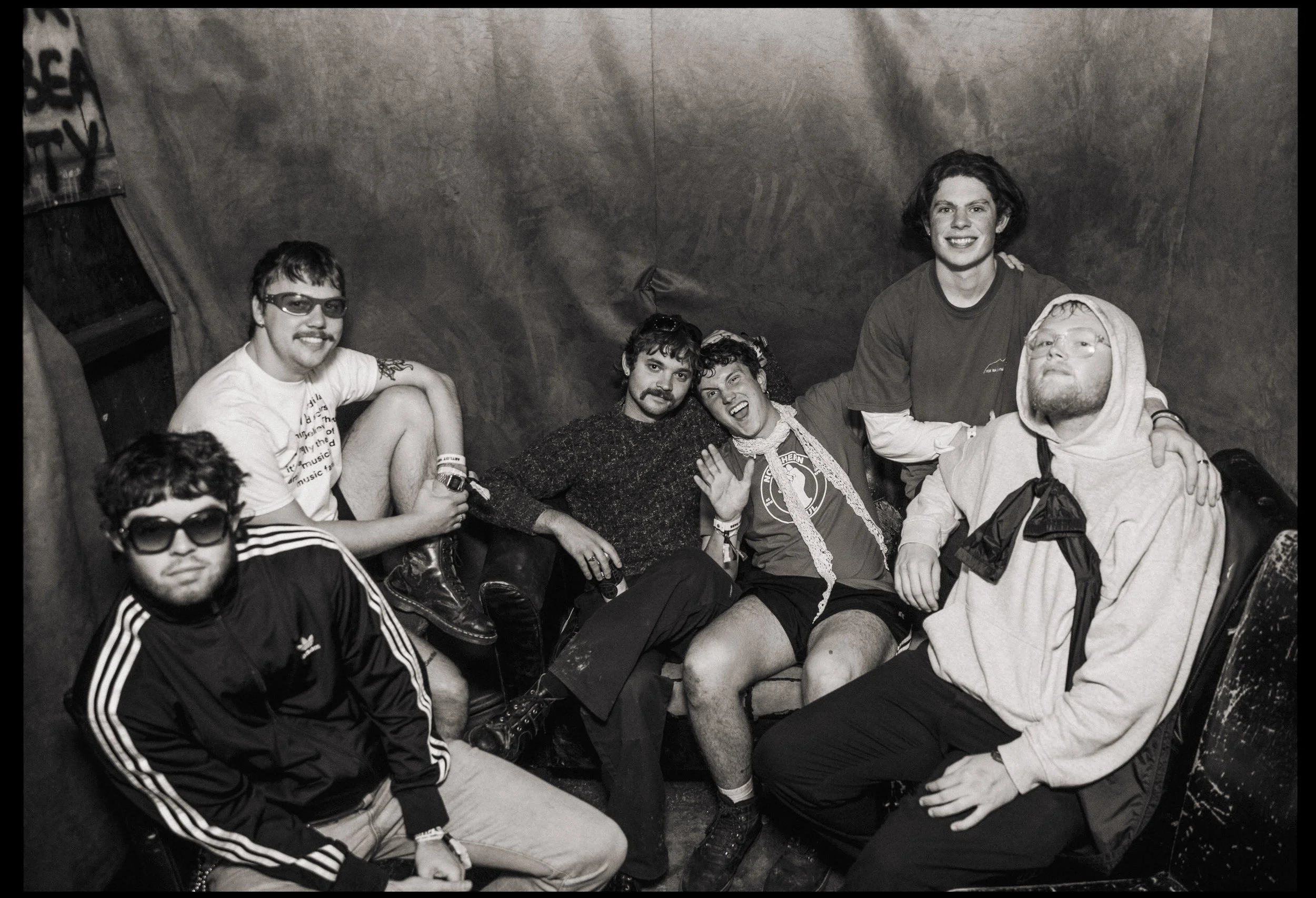
What’s been your favorite gig to date? Might be hard to hard to choose.
Paul:
It is a little bit hard to choose.
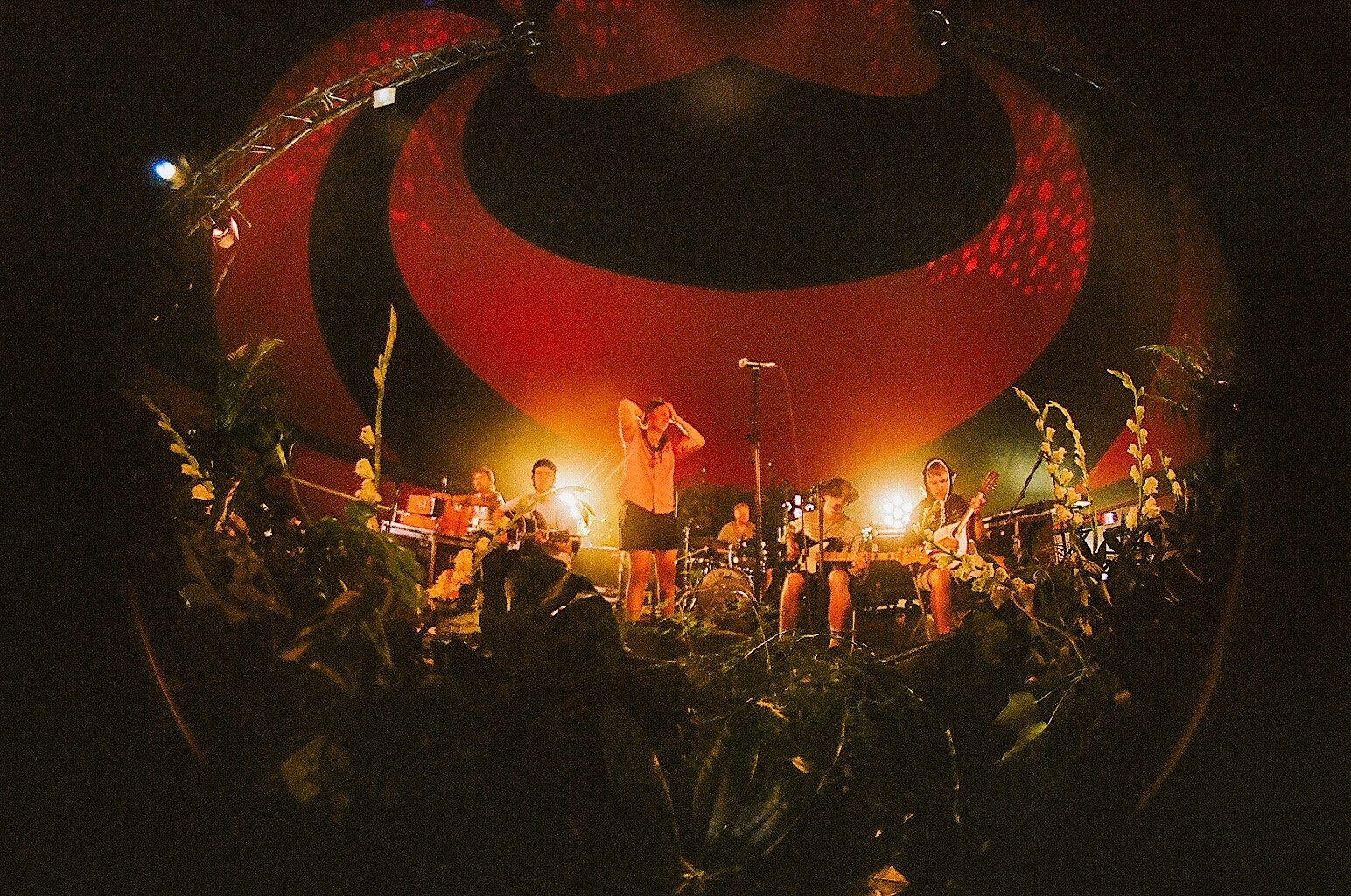
We played as part of a really great lineup for the ‘Ceol for Connelly’ in Vicar street. That was in October, just before the presidential election, obviously. It was just like a packed out Vicar Street. People were really excited, and the energy was so great in the room, and just for me, I guess walking on stage to a packed Vicar Street and people singing the words. That was crazy.
We had one in Rotterdam, which was in a church, and that was a beautiful place to play. It was called Paradise Kirk, I think, and that was like a beautiful room to play in, but like, it's probably gonna have to be Dublin for my favorite show, yeah.
Róisín:
There’s a kind of Irish folk revival at the moment. Why do you think that there's such a need for it? It feels like people are wanting it, whereas just a few years ago, it wasn’t seen as ‘cool’ to speak Irish or anything like that. Now it’s seen from the rest of the world as a cool thing, but it's also making us kind of reclaim our heritage and our culture.
Paul:
Yeah, no, I think you're right. I know that when I was growing up as a teenager, I had little to no interest in it. I looked at the Irish language and I thought it was stuffy. I hated it in school. I had no interest in it.
So I'm like a convert of this, you know, revival or whatever, like I feel like I was put wide to how beautiful the Irish language is. Now, I got into Irish music when I was a teenager because of the Pogues. The Pogues converted me because I was into punk music. And I was like nah Trad music is lame, I have no interest in it. And then I heard the Pogues, and I was like, Oh, that's cool.
You know when you're a teenager, there's the binary: is it cool or not cool. So once the Pogues showed me that Trad music could be cool, then I got obsessed with it. And like to be honest, with the Irish revival / cultural appreciation overseas, I'd love to have a very rosy and optimistic view as to why people are into it. I think because it's fucking great, and because there's loads there. And I also think that the likes of when the 1990s had, like, cool Britannia, I don't think that could happen in in the 2020s because I don't know post Covid, you know, post Black Lives Matter, people are wide to colonialism and imperialism and its effects now. So I don't think people would be going around in Union Jack T shirts as much anymore, you know, and I think that maybe Irish culture, and people outside of Ireland appreciating it. I think maybe it's because it's like, anti colonial and rebellious, but it's still white and English speaking, so it's like, rebellious, but still safe and comfortable enough for a western audience. That's my half baked idea. I think I love Irish culture and music because I'm from here, and it's fucking cool.
Róisín:
And then, the EP is coming out this month.
What else can you tell us about 2026 and shows coming up?
You guys are playing Beyond The Pale?
Paul:
We're playing Beyond the Pale again. Yes, we played there last year, and it was our first ever festival, so I'm really excited to go back there. Yeah, we're gonna be busy gigging again during the year. We’re supporting Kneecap in London, which we're really excited about.
So it's just like, not to sound too coy or corny, but just gonna keep playing live music and keep making music that excites us and hopefully excites other people.
Róisín:
Yeah, brilliant.
And then, not that it hasn't always been challenging, but currently, as someone in the Dublin music scene, what do you think is the most challenging aspect facing Irish musicians today? In this capitalist situation we’re in.
Paul:
Money.
And we've been so lucky. We had to be lucky in the first place that we all had, you know, stable homes, like most of us. I've never rented in Dublin. I don't see how anyone could really rent and work as a musician or try to.
What it demands of you, the time you need if you want to try to make music work as a career. It takes so much. We got very lucky that most of us were able to stay with our parents and be able to take a step back from, you know, full time jobs like I was working in a school. I took a step back from that so I could focus more on music. If I had been renting, I wouldn't have had that choice.
So it's like, that's got to be the biggest hurdle. We were, like, blessed in that way. I think it's just like, I don't want to say it's impossible, because that sounds a bit defeatist, but Jesus, they don't make it easy.
Róisín:
Amen. And then my last question; what gives you hope? In regards to all of that and everything going on in the world at the beginning of 2026?
Paul:
I think if you get stuck in your phone, one of the many nefarious aspects of social media and the internet is that it utilizes your empathy and upset and outrage to keep you on platforms so you can be sold more shite.
And I think if you take at face value what the world is like from your phone, it's very easy to become despondent. Now there's horrific things going on in the world, and it's not that we should bury our heads in the sand, but also, like, if you go out to gigs and you look at people to the left and right who believe in the same things, who aren't going to be complicit or silence about Gaza or, you know, aren't going to allow hate marches to walk down their roads. That gives me hope.
Community, finding people in the real world and not on your phone, who think the same as you, that gives me hope. Going to gigs and seeing Palestine flags and hearing people talk with sense, that all gives me hope. And I just think staying angry and staying vocal is kind of bare minimum, right?